

If you live full time in your caravan, car, bus or even if you just use it for small getaways nothing is worse than waking up to a flat battery! Today’s off-grid vehicles are only getting more and more power hungry as we recently realised our current Solar system just wasn’t farming enough sunlight to keep us out of the dark for long periods of time (over 2 weeks). Electrical systems and adding Solar, while essential can be confusing and a bit daunting!
In this post, I’ll walk you through the basics of RV solar systems, what you need, how to install it, and a few tips from my own experience installing solar on our Coaster bus. If you would like we also have a video on our YouTube that follows our recent upgrade, check it out here!
🧰 What You’ll Need to Upgrade Your Solar System
Here’s a quick breakdown of required components for basic solar system:
| Component | What It Does |
|---|---|
| Solar Panels | Capture sunlight and convert it to electricity |
| Charge Controller (MPPT) | Regulates voltage to safely charge batteries |
| Panel Fixings | Depending on type of Panels you use, this can range from structural silicone and very high bond (VHB) tape to panel mounting brackets |
| Cable | PV rated cable to connect you panels to the MPPT and normal 12v cable to connect the MPPT to your battery |
| Wiring misc. | Size appropriate cable lugs, MC4 connectors for the solar panels, appropriate fuses/circuit breakers for both the battery side and solar side of your wiring |
💡 Beginner Tip: Not ready to drill into your roof? Start with a portable solar system like the VoltX 200W Blanket.
🔢 How Much Solar Power Do You Need?
We have 1000ah in lithium batteries in our bus and before we upgraded our solar system was only 740 watts, as a general rule of thumb you should have at least 2 times your battery capacity in solar watts. Ideally we should have at least 2000w of solar. If you are looking to upgrade your solar system best to aim to follow this rule!
If this is a new installation before buying anything, figure out your daily energy usage:
- List your devices (lights, fridge, laptop, etc.)
- Check wattage of each
- Estimate daily hours of use
- Multiply watts × hours = watt-hours per day
- Total it up
For example:
- LED lights (20W x 4 hrs) = 80Wh
- Fridge (60W x 24 hrs) = 1440Wh
- Laptop (50W x 2 hrs) = 100Wh
→ Total: 1620Wh/day → You’ll want a system that can generate and store at least that.
✅ Rule of Thumb: A 200W panel with a 100Ah lithium battery is a solid start for light to moderate use.
⚡ What Panels do I need and how many?
Different Types of Solar Panels
There are two main types of Solar Panel to choose from: Flexible and Solid
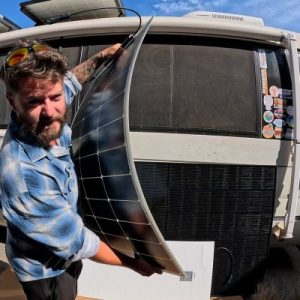
- Flexible: Flexible solar panels are slim design panels that can follow the body shape of your vehicle, general these are held to the vehicle with silicone or VHB tape and are a great option if you don’t want to mount extra structural support!
- Solid: Solid panels are the ‘OG’ Solar panels, bulkier than the flexible alternative however, there is a larger range of sizes to choose from, and some people will argue that they are more efficient than flexible panels.
How Many Do I Need?
Solar systems come in all different shapes and sizes therefore, this question unfortunately is not a one answer suits all. Firstly, you will need to establish how much wattage you need and secondly you will need to determine how much space you have to install your new panels. Once you have both of these figured out it’s time to jump on the web and see what there is to offer, solar panels come in all shapes and sizes, and every setup is different so you will need to find what best suits you.
🛠️ How to Install a Solar System– Step-by-Step
Step 1: Mount Your Solar Panels
- Clean the roof surface, first with car wash, secondly with methylated spirits (if you are installing flexible panels straight to your roof)
- Attach using brackets industrial adhesive (like 3M VHB tape) or structural silicone (like Fix8)
- Seal with Dicor or similar RV roof sealant to prevent leaks
- For a more visual example have a look at our install here.
Step 2: Connect Panels to Charge Controller
- Use MC4 connectors (standard in most kits)
- Be sure to use PV rated cable when exposed to the sun
- Don’t forget to install a double pole circuit breaker before connecting to your MPPT
Step 3: Connect Charge Controller to Batteries
- Be sure to use the correct size cable and fuse to protect your circuit
- Follow polarity (+ to +, – to -)
- Mount the controller inside your vehicle, near the batteries if possible
🔍 Test Your Solar System
Once everything is wired up:
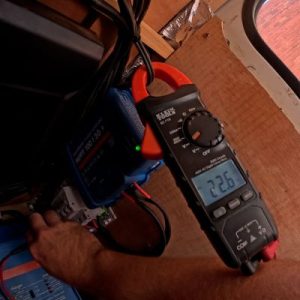
- Check connections and fuses, check for correct polarity!
- Turn on the charge controller and monitor solar input, always connect your batteries before you turn on the solar side
- If your MPPT has an app to connect to your phone, this is a good way to confirm it is working
⚠️ Safety First: Disconnect solar panels before wiring anything. Wear gloves and eye protection when working near batteries.
🧼 Maintenance & Tips
- Wipe off panels regularly to keep them efficient
- Inspect cables and battery terminals every few months
- Use a Bluetooth monitor or battery monitor to track usage
It might take a weekend of work and some research up front—but the reward is pure, quiet energy and a lot less stress on the road. If you would like to see a full install and a more detailed explanation of this whole process, check out the video, over at our YouTube channel.
Got questions about your setup? Drop them in the comments or message me—happy to help!
If you liked this article, be sure to have a browse of our other articles.